
Golden larches are deciduous conifers. Their soft needles turn gold each autumn, drop, and grow back green in spring. Washington has two kinds. Western larch grows on mid-elevation slopes, from about 2,000 feet up past 5,000. Alpine larch grows higher, near timberline. Both color up on the drier eastern side of the North Cascades.
If you are planning a trip around them, start with the geography. The larches you see in photographs grow east of the Cascade crest, along and beyond the North Cascades Highway. You will not find large groves on the Mt. Baker Highway itself. What Glacier offers is different. Rich fall color close to our cabins, and a quiet base for day trips into true larch country to the east.
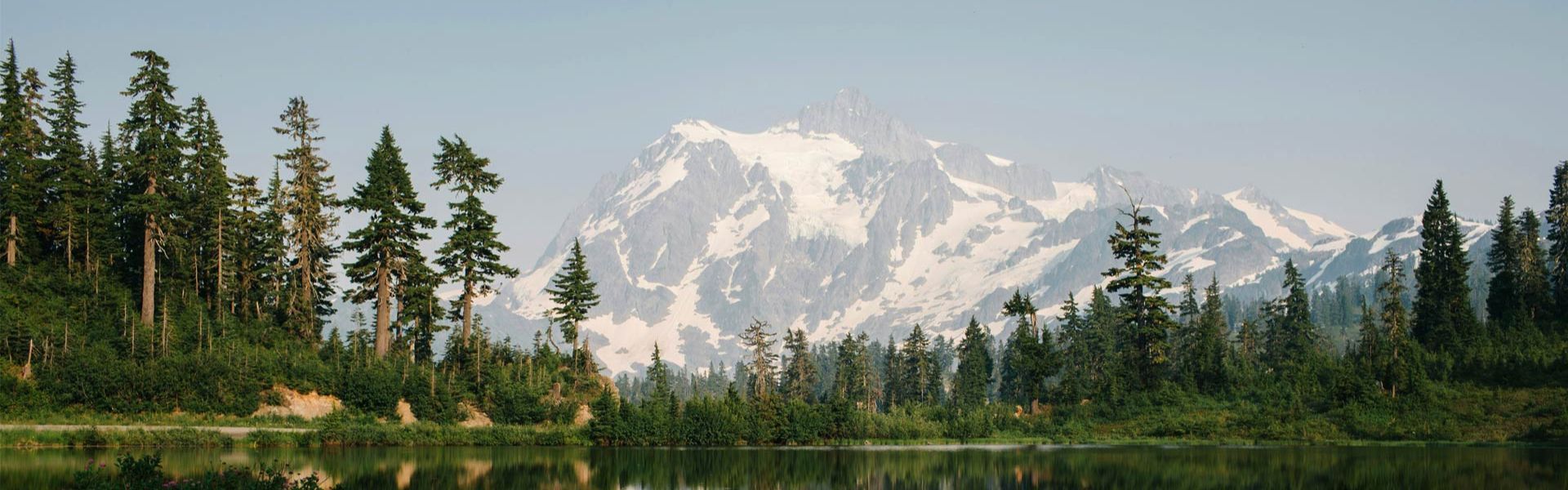
Nearby Mt. Baker trails carry their own autumn color. Red huckleberry leaves, yellow grasses, and low alpine plants turning across the slopes. The larch hikes begin farther east, off the North Cascades Highway.
What Are Golden Larches and Why Are They Unique?
For most of the year, larches look like the pines and firs around them. Then they do something those trees cannot. They lose their needles.
As temperatures cool, the needles shift from green to yellow to deep gold. At peak color, a grove stands out against gray granite, blue sky, and the first mountain snow. Western larch runs lower and colors a little later. Alpine larch sits higher and turns first.
The color holds for only a few weeks. That short season is a reason to slow down and watch the mountains turn toward winter.
When Do Golden Larches Peak in Washington?
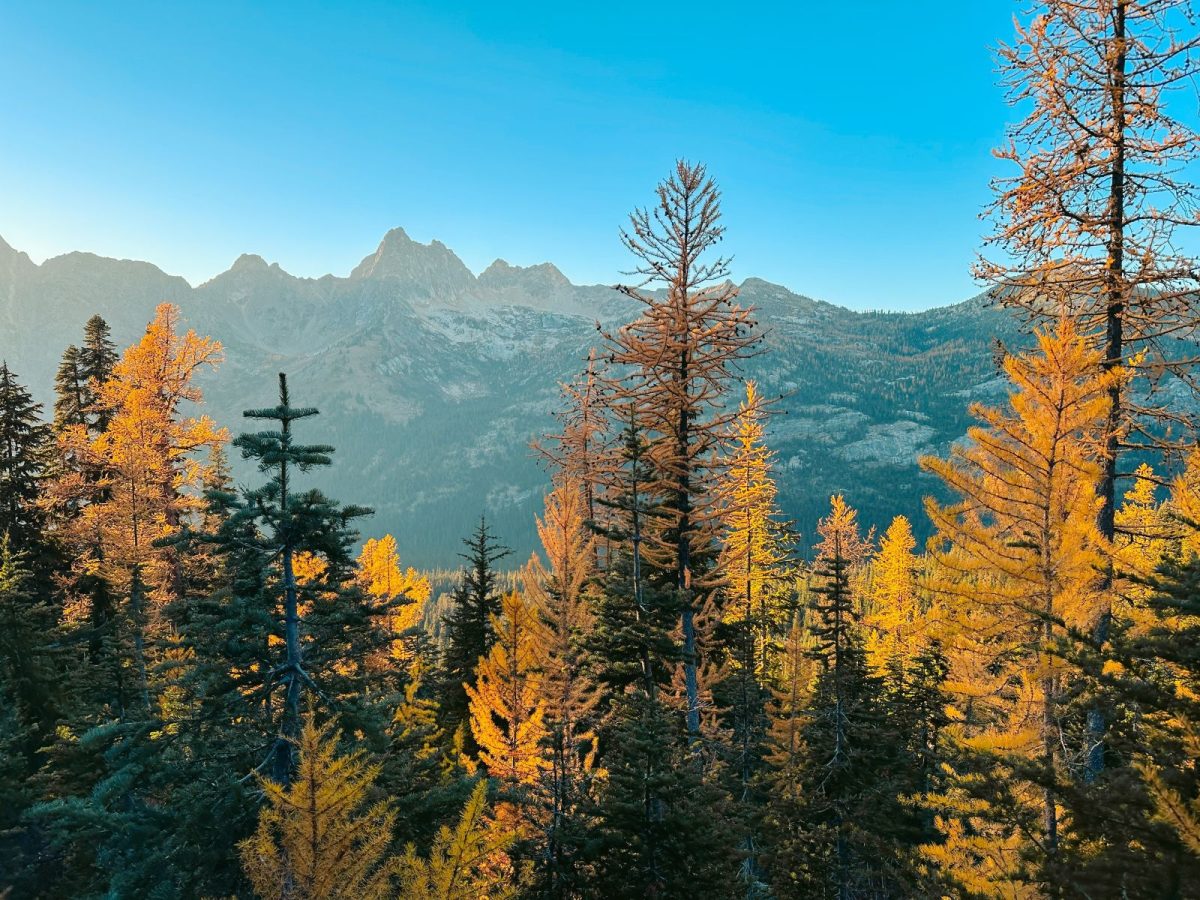
Golden larches generally reach peak color between late September and mid-October. The exact timing depends on elevation, temperature, wind, and early snowfall.
- Late September: Needles begin turning yellow at higher elevations.
- Early October: Many alpine larch groves reach their richest gold.
- Mid-to-late October: Wind and snow begin removing needles from the branches.
Early October usually offers the best chance of seeing peak color. Mountain weather can change quickly, so check current road and trail conditions before leaving.
Which Nearby Hikes Have Golden Larches and Allow Dogs?
These destinations are arranged from closest to farthest from Luxury Getaways homes around Glacier, Washington. Each one clearly identifies whether it has larches and whether dogs are allowed.
Horseshoe Bend Trail
Larches: No
Dogs: Yes, on leash
Approximate drive: 5 minutes from Glacier
Horseshoe Bend follows the North Fork Nooksack River beneath a thick forest canopy. It does not have larches, but changing maple leaves add warm color to the mossy riverside setting.
This gentle route works well for families, dogs, or guests seeking an easy autumn walk close to their cabin.
Yellow Aster Butte
Larches: No established larch groves
Dogs: Yes, on leash
Approximate drive: 35 minutes from Glacier
Yellow Aster Butte is known for red huckleberry leaves, yellow grasses, alpine meadows, and broad North Cascades views. The trail does not pass through the golden larch forests found east of the Cascade crest.
The 7.5-mile route gains about 2,550 feet. Its bold ground color still makes it one of the best fall hikes in Washington.
Artist Ridge and Huntoon Point
Larches: No
Dogs: Yes, on leash
Approximate drive: 45 minutes from Glacier
These short paths near Artist Point frame Mt. Shuksan with red, orange, and gold alpine plants. They are easy places to enjoy Mt Baker fall foliage, but the yellow plants are not larches.
Leashed dogs can explore Artist Ridge. Dogs are not allowed on the neighboring Table Mountain Trail.
Ptarmigan Ridge
Larches: No established larch groves
Dogs: Yes, on leash
Approximate drive: 45 minutes from Glacier
Ptarmigan Ridge begins near Artist Point and crosses open alpine terrain beneath Mt. Baker. Low-growing plants turn rust, red, and yellow as the weather cools.
This is a memorable fall hike, but it is not a golden larch trail. The route is exposed, so hikers should prepare for wind and rapidly changing weather.
Easy Pass
Larches: Yes
Dogs: No
Approximate drive: Roughly 2½ to 3 hours from Glacier
Easy Pass is the closest well-established true larch hike reached by road from the Glacier area. Despite its name, the trail is strenuous. It climbs about 2,800 feet over 3.5 miles before reaching the pass.
Scattered subalpine larches grow near the pass and around Fisher Basin. Dogs are prohibited because the route enters North Cascades National Park.
Lake Ann at Rainy Pass
Larches: Yes
Dogs: No
Approximate drive: Roughly 2¾ to 3 hours from Glacier
Lake Ann offers a shorter way to see golden larches near Rainy Pass. The 3.4-mile round-trip hike gains about 700 feet and leads to a mountain lake ringed by larch trees.
This is one of the more approachable larch hikes in the area. Dogs are not permitted on this route.
Heather-Maple Pass Loop
Larches: Yes
Dogs: No
Approximate drive: Roughly 2¾ to 3 hours from Glacier
Heather-Maple Pass Loop begins from the same Rainy Pass area as Lake Ann. The 7.2-mile route climbs through open terrain above lakes surrounded by golden larches.
The loop gains about 2,020 feet and requires more effort than the Lake Ann hike. Dogs are not allowed because portions of the route enter North Cascades National Park.
Blue Lake Trail Near Washington Pass
Larches: Yes
Dogs: Yes, on leash
Approximate drive: About 3 hours from Glacier
Blue Lake is one of the closest dog-friendly larch hikes to Luxury Getaways cabins. Be sure you select the Blue Lake near Washington Pass, not the trail with the same name south of Mt. Baker.
The moderate 4.4-mile hike gains about 1,050 feet. It passes through larch habitat before reaching a clear alpine lake surrounded by granite peaks.
Washington Pass Overlook
Larches: Yes, in the surrounding landscape
Dogs: Yes, on leash
Approximate drive: About 3 hours from Glacier
Washington Pass Overlook is a scenic stop rather than a full hike. A short paved path leads to views of Liberty Bell Mountain and the eastern North Cascades.
Larches grow across the surrounding high country. This is one of the best places to see golden larches in the fall for guests who do not want a long mountain hike.
Cutthroat Pass
Larches: Yes
Dogs: Yes, on leash
Approximate drive: About 3 to 3¼ hours from Glacier
Cutthroat Pass travels through open larch country east of Washington Pass. The route includes forest, alpine terrain, and expansive mountain views.
Depending on the chosen approach, hikers should expect about 10 to 11 miles. This demanding outing is best for experienced hikers and dogs accustomed to long mountain trails.
Drive times vary by rental location, traffic, construction, and weather. State Route 20 closes seasonally after heavy snow. Check current road conditions, trail restrictions, and pet rules before setting out.
Our pet friendly vacation rentals in Mt. Baker give every member of the family a comfortable place to rest after the trail.
Where Should You Stay for a Peaceful Mt. Baker Fall Trip to See the Golden Larches?
The most inviting places to stay near Mt. Baker include private homes and woodland cabins around Glacier. From here, you can explore local fall trails or plan a longer drive into larch country.
Our Mt. Baker vacation rentals offer comfortable gathering spaces, equipped kitchens, and quiet forest surroundings. Begin with coffee beside the windows. Return after your hike for dinner and a restful evening by the fire.
Guests with mobility needs can explore our handicap accessible Mt. Baker lodging. Our local team can help you choose a home that fits your group.
For even more stillness, consider our Mt. Baker Rim cabins. The forest feels close here, especially during the cool, quiet days of autumn.
A Few Things Worth Knowing
Are golden larches and golden larch the same tree? Not quite. In Washington, "golden larch" is what people call our two native larches, Western and alpine, once their needles turn. The trade name "golden larch" belongs to a different tree from China. On the trail here, you are looking at Western and alpine larch.
Can you see golden larches near Mt. Baker? Not in large groves. The Mt. Baker Highway corridor carries strong fall color in huckleberry and alpine ground cover, but the larch hikes are east of the crest. Glacier works well as a base for both.
Do you need to hike to see them? Not always. Western larch is visible from several highway passes, including stretches of the North Cascades Highway. The alpine larch basins take a hike to reach.
Book Your Mt. Baker Vacation Rental with Luxury Getaways
At Luxury Getaways, we believe luxury is peace of mind. It is arriving at a thoughtfully prepared home and knowing the details have been handled.
Spend the morning exploring Mt. Baker’s autumn trails. Or make a full-day journey east to walk beneath golden larches. When you return, a warm and comfortable home will be waiting.
Book your fall stay with Luxury Getaways and give yourself time to exhale.