

Some of the oldest oaks on St. Simons are watching you. Look up into the right tree, into the fork of a branch or the stub where a limb once was, and a face looks back. Weathered and quiet, half-hidden in the bark, with an expression somewhere between sorrow and calm. These are the St Simons Tree Spirits. Once you have found one, you start seeing them everywhere, and the island’s canopy of live oaks and Spanish moss stops being scenery and starts feeling watched over.
What the tree spirits are
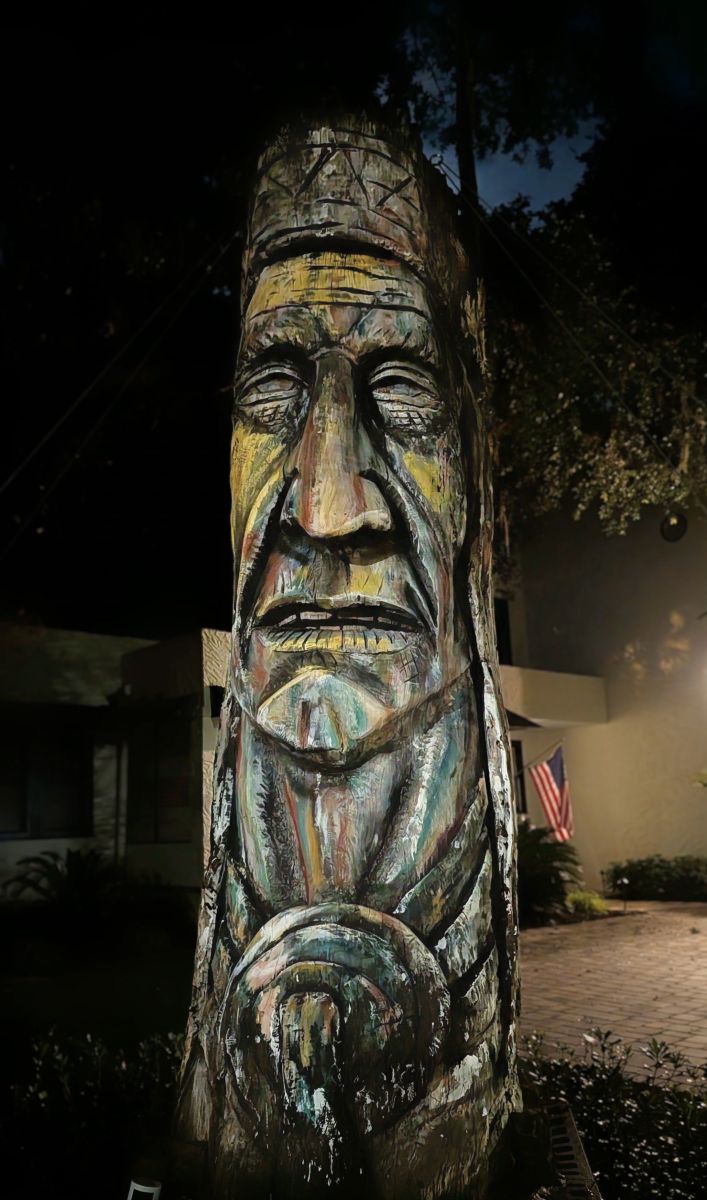
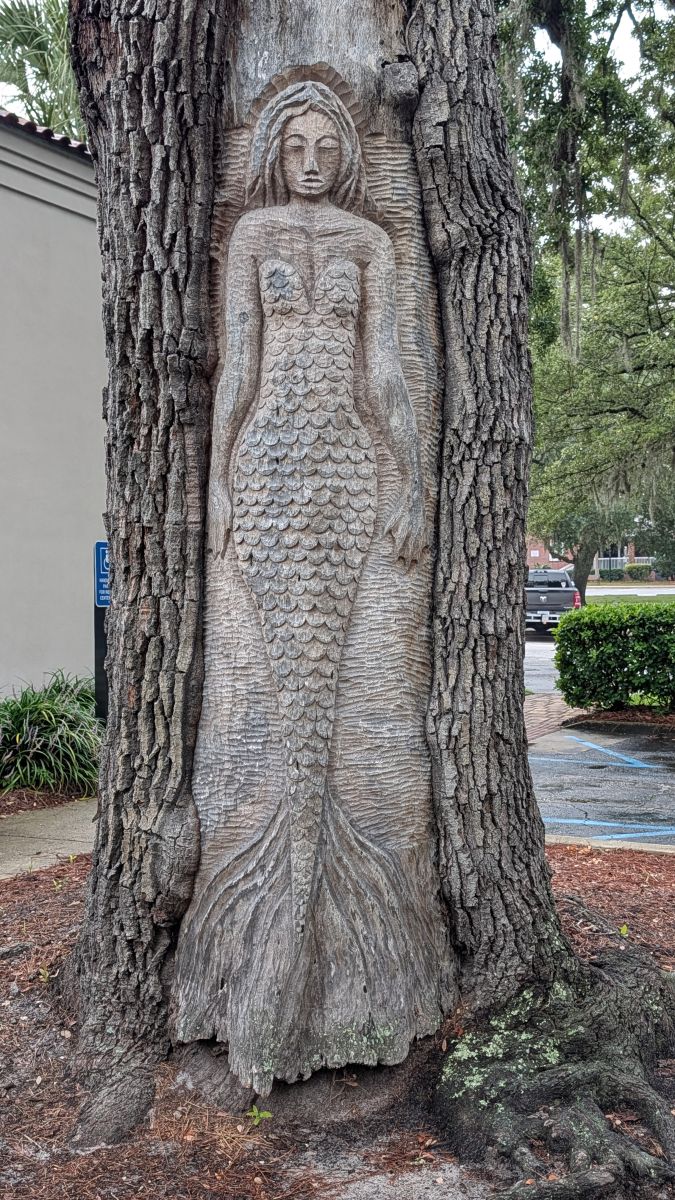
The tree spirits are faces carved directly into living oaks around the island. Most are human, worn and weathered, as if they had always been there. Some are read as sailors, others as Native Americans or old soldiers. One, Cora the Mermaid, is a full figure rather than a face, and she has become a favorite. No two are alike, because the tree decides as much as the carver does. A fork in the trunk, a knot, or the scar where a limb broke off in a storm becomes an eye or a cheekbone or a mouth. The carvings weather with the tree, darkening and softening over the years until they look less made than uncovered. Over four decades they have become one of the island’s signatures, quiet enough to miss and strange enough to remember.
The legend, and the history under it
Local legend says the faces honor the sailors lost at sea aboard ships built from St. Simons oak. It is a good story, and it sits on top of something real. On the island’s western shore, at Gascoigne Bluff where the causeway now meets the land, live oak was cut and shipped north in 1794 to build the first ships of the United States Navy. Among them was the USS Constitution, still afloat in Boston Harbor and known as Old Ironsides for the way British cannonballs bounced off her hull of dense island oak. Timber from the same bluff was later cut for the Brooklyn Bridge. The wood was hard and slow-grown and shaped by the coast, which is exactly what made it valuable. The cutting was done by enslaved workers, part of the harder history the island carries alongside the myth. The tree spirits sit where all of it meets: the oaks, the ships, the sailors, and the island that sent its trees out into the world and kept the rest.
The artist behind them
The faces are the work of Keith Jennings, who began carving them on St. Simons in the early 1980s. He was drawn to the island by its oaks, and what started as a single carving grew into a body of work spread across the island over four decades. Jennings has said he does not so much invent each face as find it, letting the shape and grain of the tree lead him. A single carving takes two to four days by hand. He works into damaged trunks and old limb scars rather than sound wood, and arborists he has consulted over the years note that live oak is resilient enough that careful carving does it little harm. Many of the trees he has worked were already hollow inside and still standing. More recently his son Devon has taken up the work, carving the newer spirits under his father’s eye, so the island keeps gaining faces even now.
Where to find them
Somewhere between twenty and forty tree spirits exist around the island, and a handful sit on public land where anyone can find them. The easiest place to start is Cora the Mermaid, near the Pier Village at the south end. She is the only full-body carving, known on the island as a protector of the loggerhead turtles that nest along the coast, and children almost always spot her first. A few others sit at recognizable public spots, including some of the island’s small parks. Because new spirits appear and many sit on private property, the most reliable way to hunt them is to pick up the current map at the Golden Isles Welcome Center in the Pier Village, which keeps track of where they are.
How to make an afternoon of it
Finding the tree spirits is a treasure hunt more than a tour. Get the map, then work through it on foot in the village and by car for the ones farther out. The general location gets you close, but you still have to search the oaks, which is most of the fun. It suits children well, and it gives an ordinary walk a small purpose. A few things worth keeping in mind. Many carvings are on private property or business grounds, so look without disturbing anyone. Do not climb on or touch them, since they are living wood. Bring a camera, because the faces read best in the filtered light under the moss and photograph strangely well. When you have found a few, the Pier Village and the beach are a short walk away, so the hunt folds easily into the rest of a day.
A reason to look up
The tree spirits reward the thing the island asks of you anyway, which is to slow down and look up. They cost nothing but an afternoon, which is rare for something this memorable, and they pair well with the rest of the things to do on St. Simons Island. When you stay in one of our homes on the island, the map is a short walk away and the oaks are all around you, most of them ordinary, a few of them watching back.
Questions guests ask
Who carved the tree spirits on St. Simons Island?
They are the work of artist Keith Jennings, who began carving faces into the island’s oaks in the early 1980s. His son Devon now carves the newer ones alongside him.
What do the tree spirits mean?
Local legend says they honor the sailors lost at sea on ships built from St. Simons live oak. Jennings himself describes each one less as a portrait than as the spirit of the tree it came from. You are welcome to read your own story into them, which is part of the point.
How many tree spirits are there?
Somewhere between twenty and forty exist around the island, with a handful on public land where anyone can find them. New ones still appear.
Where can I find them?
The easiest to find is Cora the Mermaid, near the Pier Village at the south end. For the rest, pick up the current map at the Golden Isles Welcome Center in the Pier Village, since many sit on private property and the list changes.
Does it cost anything to see them?
No. The public tree spirits are free to visit. All you need is the map and an afternoon.
Do the carvings hurt the trees?
Jennings carves into damaged trunks and old limb scars rather than healthy wood, and arborists he has worked with say live oak is resilient enough that careful carving does it little harm. Some of the trees he has carved were already hollow and still standing.