
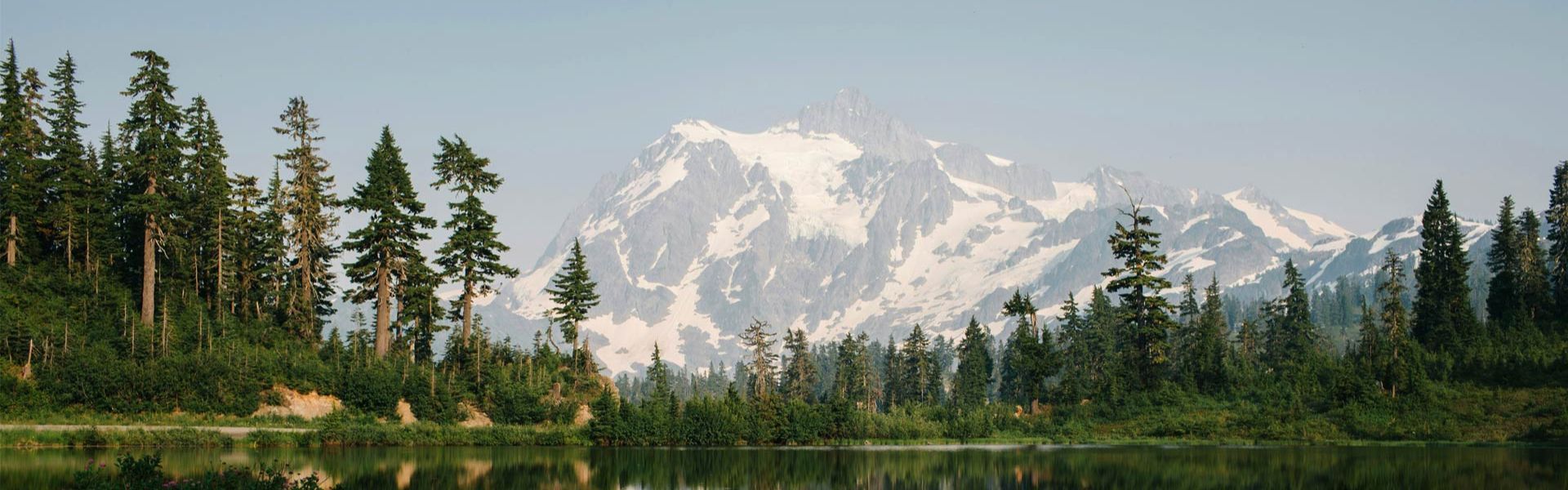
Skiing Mt. Baker means driving to the end of the road in the North Cascades of Washington. The ski area sits on the flanks of Mt. Shuksan, about an hour and a half east of Bellingham, and it holds the world record for snowfall in a single season: 1,140 inches, measured in the winter of 1998-99 and verified by NOAA.
By the numbers, the mountain is modest. It has 1,000 skiable acres and a 1,500-foot vertical drop. It is also one of the most independent ski areas in the country. It has operated since 1953. The business and its facilities are independently owned, and the ski area sits on National Forest land under a special-use permit from the U.S. Forest Service. It does not advertise, it is not part of a megapass, and it is tucked inside Mt. Baker-Snoqualmie National Forest at the end of the road. People drive up the Mt. Baker Highway for the snow and the terrain, and a lot of them come back every winter.
This guide covers what to know before skiing Mt. Baker: snowfall, season dates, terrain, lift tickets, the backcountry gates, the drive, and where to stay in Glacier.
Mt. Baker Ski Area at a glance
- Skiable acres: 1,000
- Summit elevation: 5,089 feet. Vertical drop: 1,500 feet
- Lifts: eight chairlifts and two handle tows
- Average snowfall: roughly 650 to 690 inches a year, depending on the source
- Typical season: late November into April, depending on snow
- Closest town: Glacier, Washington, about 17 miles from the ski area
- Lodging at the ski area: none. The ski area is on National Forest land
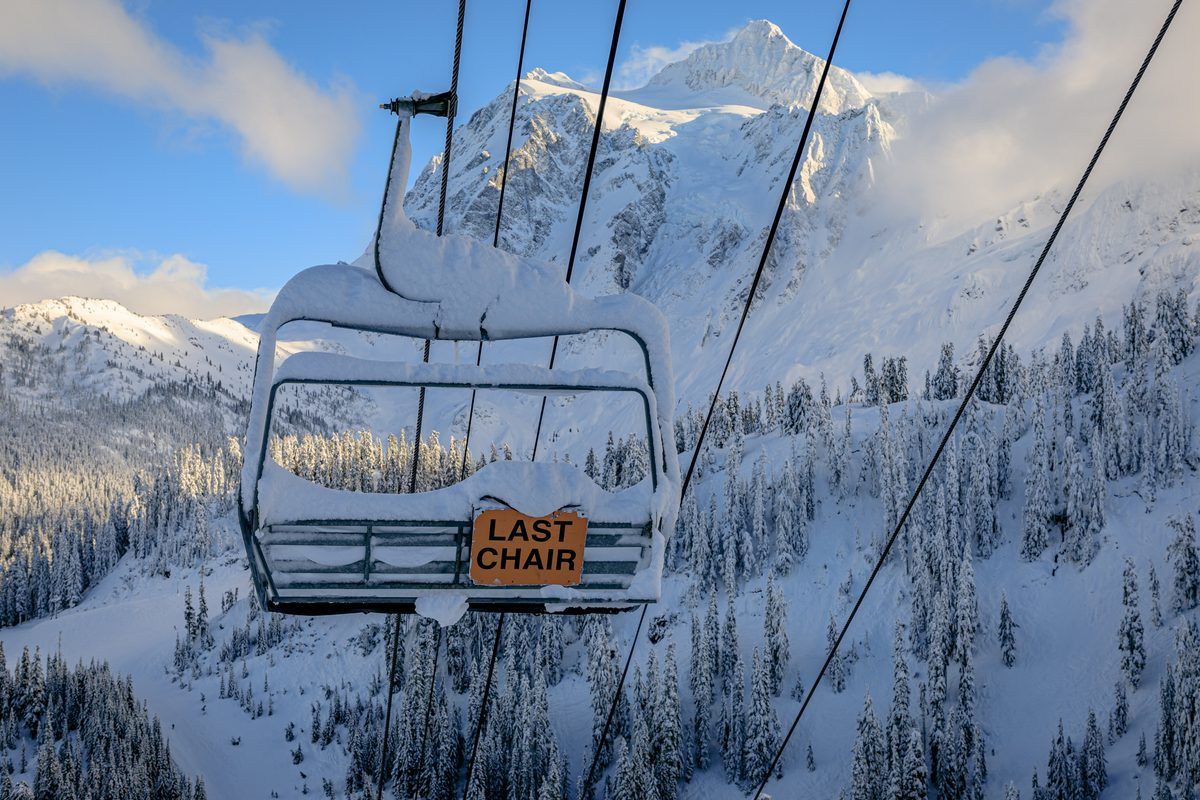
[IMAGE: Heather Meadows base area with chairs running. Alt text: Chairlift at Mt. Baker Ski Area under fresh snow]
How much snow does Mt. Baker get?
Mt. Baker averages roughly 650 to 690 inches of snow a year, about twice what most U.S. ski areas receive. SKI Magazine puts the average at 688 inches. The ski area’s own season totals for 2010-11 through 2025-26 average out to about 653.
The range between winters is wide. The ski area recorded 866 inches in 2016-17 and 303 inches in 2014-15. Last winter finished at 502 inches, with 142 of them falling in December.
The snow is not always dry. Mt. Baker sits about 30 miles from the Pacific Ocean, so the snow tends to come in dense and wet. It also sits close to the freezing line in the North Cascades, so one storm can leave light powder and the next can leave something much heavier. Skiers who know the mountain pay attention to elevation and aspect before they pick a run.
Mt. Baker does not make snow, and nobody there seems to miss it. The lifts open when natural snowfall builds a base, which in recent seasons has meant roughly 20 to 40 inches at the Heather Meadows base area, along with cold temperatures and a favorable forecast. The opening date moves from year to year.
When is the Mt. Baker ski season?
The season typically runs from late November into April. The projected opening for 2026-27 is December 18, with a projected closing of April 18, 2027. Both dates are projections, and the ski area waits on snow.
Check the Mt. Baker snow report and road conditions before you book a trip, and again the night before you drive up.
What is the terrain like at Mt. Baker?
Skiing Mt. Baker feels larger than its acreage suggests. The terrain rolls and folds, with small drainages, tree pockets and chutes tucked between the main runs, so a day here rewards exploring.
Newer skiers and riders will find gentler runs off Chairs 2, 3 and 4. Experienced skiers head for the steeper terrain off Chairs 1 and 5, and for the pillow lines and narrow chutes in Gabl’s, the Chair 6 trees and Pan Face.
The mountain suits intermediate and advanced skiers and riders best. Chairs 3 and 4 also serve a freestyle feature zone.
What lifts does Mt. Baker have?
Mt. Baker runs eight chairlifts and two handle tows. Here is what each one does.
- Chair 1 (Pan Dome): runs from 4,239 to 5,023 feet. It is typically closed on weekdays.
- Chair 2 (Heather): a beginner-friendly chair, open weekends and holidays.
- Chairs 3 and 4 (Up and Up): serve the lower and intermediate terrain and the freestyle feature zone.
- Chair 5 (Shuksan Arm): reaches the upper mountain and the backcountry routes.
- Chair 6 (Sticky Wicket): the main mid-mountain lift. A short walk from it leads to the Chair 1 terrain.
- Chair 7 (Espresso): has a dedicated slow zone and runs the night skiing operation.
- Chair 8 (White Salmon): the longest chair on the mountain. It reaches groomed runs, the Hemispheres and Shuksan Arm.
- Handle tows (White Salmon and Heather Meadows): two beginner surface lifts. Access to the handle tows is free.
Can you ski the backcountry at Mt. Baker?
Yes, with conditions. Mt. Baker was one of the first ski areas in the country to open backcountry gates, and the terrain along Mt. Shuksan, including Shuksan Arm and the Artist Point area, is a major reason skiers make the drive.
Mt. Baker has a written backcountry policy that applies whenever you leave the ski area boundary or come back in through it. You must carry all of the following, or you lose your lift ticket or season pass privileges:
- Knowledge of the terrain and current avalanche conditions, including this winter’s snowpack, recent snowfall, the current avalanche forecast, and the day’s weather forecast
- A partner
- An avalanche transceiver, and the ability to show you can use it
- A shovel
The ski area also recommends a probe and a cell phone. The terrain beyond the boundary is Forest Service land, which is not patrolled and not avalanche controlled. Avalanches can happen at any time, and rescue may not be possible. Anyone who needs a rescue is charged at least $750. Policies can change, so read the signs on the mountain.
Check the Northwest Avalanche Center forecast before you go. Read the full Mt. Baker backcountry policy before you head out the gate.
If you do not have the gear or the knowledge, a local guide can take you out. Two options are Baker Mountain Guides and Blackbird Mountain Guides.
How much are Mt. Baker lift tickets?
Mt. Baker sells day tickets only, and only at the ski area on the day you ski. There are no reservations, digital tickets, pre-purchased tickets or multi-day tickets. The printed ticket attaches to your jacket with a wire wicket. Prices below are for skiing Mt. Baker in 2026-27. Adult prices are listed before tax and with Washington’s 8.3 percent tax.
PEAK DAYS: FRIDAY TO SUNDAY AND HOLIDAYS
- Adult (16 to 59): $115.42, or $125.00 with tax
- Youth (11 to 15): $71.10
- Child (7 to 10): $49.86
- Senior (60 to 69): $97.88
- Super senior (70 and older): $68.33
- Beginner adult: $70.18
- Beginner youth: $59.10
OFF-PEAK DAYS: MONDAY TO THURSDAY, NON-HOLIDAYS
- Adult (16 to 59): $98.80, or $107.00 with tax
- Youth (11 to 15): $60.94
- Child (7 to 10): $41.55
- Senior (60 to 69): $83.10
- Super senior (70 and older): $58.17
- Beginner adult: $60.02
- Beginner youth: $49.86
Children 6 and under, enrolled fifth graders and the handle tows are free. Through the Powder Pups program, an adult skiing with an enrolled child ages 3 to 6 gets a half-price ticket, up to two per day, available after 10:00 a.m.
Mt. Baker is not part of Epic, Ikon or any other megapass. It is independently owned and sells its own tickets and passes.
How far is Mt. Baker from Seattle, Vancouver and Bellingham?
Mt. Baker is a day trip from three cities, and the drive ends where the road ends.
- Bellingham, Washington: about 1.5 hours
- Vancouver, British Columbia: about 2 hours
- Seattle, Washington: about 2.5 hours
Winter driving on the Mt. Baker Highway calls for good tires and a plan for chains.
What makes Mt. Baker different from other ski areas?
Mt. Baker runs on its own terms. It sits far from the electrical grid, so it generates its own power, collects its own water and treats its own wastewater. It does not advertise or partner with collectives. The three lodges have no televisions, and cell service is a recent addition. Each lodge has a resident cat.
The ski area has the essentials: rentals, lessons and food. Most people bring their own gear, and many gather in the parking lot after the lifts close. The chairlifts run slower than at a big resort, and there is less grooming. The road ends at the ski area, which helps keep the crowds down.
SKI Magazine recently visited to see how this approach holds up on the ground. Read SKI Magazine’s report on Mt. Baker.
Where to eat near Mt. Baker
On the mountain, the Heather Meadows Cafe serves the best food, and the White Salmon Base Lodge has a piano open to anyone who wants to play it.
Down the highway in Glacier, Chair 9 Pizza Place is a long-running local favorite, and Wake’n Bakery is worth a stop on the way up in the morning. Bellingham has the larger restaurant and brewery scene if you want a full dinner on the drive home. Hours change with the season, so always call ahead and check business hours in Glacier before you go.
Where to stay near Mt. Baker Ski Area
There is no lodging at the ski area. It sits on National Forest land, so most people skiing Mt. Baker stay in Glacier, the closest town on the Mt. Baker Highway.
Luxury Getaways manages homes in Glacier and the surrounding Mt. Baker area. After a ski day, the house is where the day ends: wet gear drying by the door, a kitchen that can feed the whole group, and a table to sit down at together.
Our homes sit in five Mt. Baker area neighborhoods: Mt. Baker Rim, Snowline, Snowater, Glacier Springs and Silver Lake. You can filter by hot tub, pet friendly, waterfront and accessible homes. Browse our vacation rentals near Mt. Baker Ski Area.
Glacier sits about 17 miles west of the ski area on the Mt. Baker Highway, according to the ski area. Plan on about 30 minutes in dry conditions and longer in snow. Leave extra time on a powder morning, when the road and the parking lots fill.
Tips for skiing Mt. Baker for the first time
- Check the snow report and road conditions the night before and again that morning.
- Arrive early on a storm or powder day. Parking at the ski area is limited, and the ski area posts daily lot status during the season.
- Buy your ticket at the ski area on the day you ski. Plan for a line on busy days.
- Pack for the parking lot as well. Many skiers stay for a drink and a snack after the lifts close.
- Go Monday through Thursday for lower ticket prices and shorter lift lines.
- Carry chains or traction devices and keep gas in the tank. There are no services past Glacier.
- Pack for wet snow as well as cold. Layers that handle both are worth having here.
- Treat the backcountry gates as a skills decision. Go with a transceiver, a shovel, a partner and current avalanche knowledge, or hire a guide.
A mountain that stays itself
Mt. Baker has kept its own pace. The lodges have cats. The parking lot is part of the day. The ticket still clips to your jacket, and the snow falls the way it has for decades. After the lifts close, Glacier is a short drive down the valley, and the house is waiting.
Frequently asked questions
[Is there lodging at Mt. Baker Ski Area?
No. The ski area is on National Forest land and has no hotel or lodging on site. The closest town is Glacier, on the Mt. Baker Highway, where most visitors stay in vacation rentals, cabins and lodges.
When does Mt. Baker open for the season?
Mt. Baker typically opens in late November or December and runs into April. It makes no snow, so the opening date depends on natural snowfall. The projected opening for 2026-27 is December 18.
How much snow does Mt. Baker get?
Mt. Baker averages roughly 650 to 690 inches a year, depending on the source. It holds the world record for a single season, 1,140 inches in 1998-99, verified by NOAA.
Can you buy Mt. Baker lift tickets online?
No. Mt. Baker sells day tickets only at the ski area on the day you ski. It does not offer reservations, digital tickets, pre-purchased tickets or multi-day tickets.
Is Mt. Baker good for beginners?
Mt. Baker has gentler runs off Chairs 2, 3 and 4, but the mountain suits intermediate and advanced skiers and riders best.
Can you ski the backcountry at Mt. Baker?
Yes. Mt. Baker has backcountry gates that lead to terrain around Mt. Shuksan. Skiers must carry an avalanche transceiver and shovel, go with a partner, and know current avalanche conditions. Terrain beyond the boundary is not patrolled.